Job
Select road work, utility work, construction, manufacturing, wet dock, cold storage or emergency response. Each job changes the balance between visibility, waterproofing, insulation and footwear grip.
Choose the job, hazard and fit concern. The selector narrows Helly Hansen workwear and safety footwear into a short, practical recommendation that a supervisor can review with a buyer. It is a guidance tool, not a substitute for a site-specific safety assessment.
Start Selector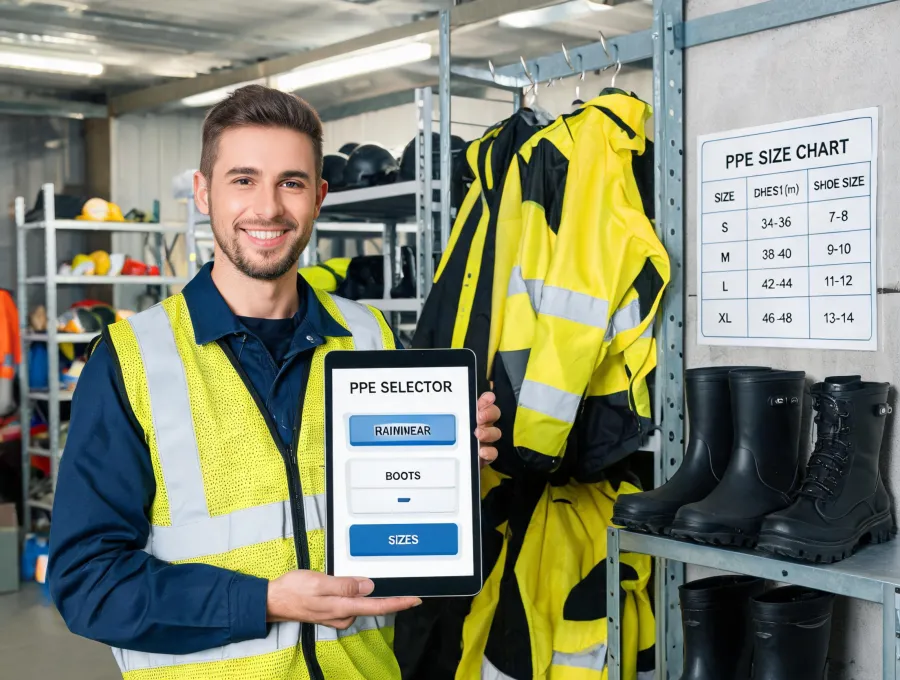
Select road work, utility work, construction, manufacturing, wet dock, cold storage or emergency response. Each job changes the balance between visibility, waterproofing, insulation and footwear grip.
Pick the main hazard: rain, low light, wet walking surface, cold exposure, kneeling abrasion or vehicle traffic. The recommendation stays focused on the hazards that drive apparel selection.
Review a short kit that may include hi-vis rain jacket, waterproof bib, base layer, safety boot, reflective accessory and replacement notes for seasonal stocking.
Fit is one of the most common reasons protective apparel fails in daily use. Jackets must allow shoulder movement and layering without hiding reflective bands. Bibs and pants should support kneeling, climbing and vehicle entry without pulling. Boots should be reviewed for toe box, arch support, outsole grip and the socks workers actually wear. For group orders, collect sizes early, identify tall and women's size requirements, and keep a supervisor-approved exception process for workers who fall outside the main curve.
Check sleeve length, hood compatibility, reflective placement and range of motion over base layers.
Review waterproofness, breathability, storm flaps, cuffs and the comfort tradeoff in active work.
Confirm ASTM F2413-18 or EN ISO 20345 requirements, safety toe type, outsole grip and wet surface needs.
Helly Hansen workwear is often purchased beside broader PPE programs. When respiratory protection is part of the same crew issue, fit testing must be handled under the employer's respiratory protection program. Disposable or reusable respirators should be selected, trained and fit tested according to the applicable program requirements, such as OSHA 1910.134 in the United States. Workwear planning can support that process by avoiding collars, hoods or accessories that interfere with respirator straps, face seals or head movement.
The selector therefore asks about respirator use only to flag coordination needs. It does not provide a respirator approval claim, NIOSH approval number or assigned protection factor. Those details must come from the respirator manufacturer and the employer's competent program documentation.
Waterproof jacket, bib, base layer, slip-resistant waterproof boot and spare dry layer.
Class 3 jacket, reflective pant or bib, high-visibility accessory and boot option reviewed for wet pavement.
Insulated outerwear, breathable midlayer, grip-focused boot and replacement schedule before winter storms.
Send the job roles, hazards and size questions that keep slowing down your issue process. We will help turn them into a practical workwear recommendation.